
Academic Programme
A Learning Journey That Grows With Every Child.
From Nursery to Class XII, every stage of learning is thoughtfully designed to build confidence, deepen understanding, and prepare students for the opportunities ahead. At Tulips International School, each year builds naturally upon the last, ensuring steady academic, personal, and social growth.

Pre-school
The First Few Years Set the Tone
Pre-School · Ages 3–5
At this stage, the goal isn’t to get ahead — it’s to build the habits that make later learning possible: sitting through a story, taking turns, holding a crayon with some intention. Classrooms are built around play that happens to teach, rather than lessons dressed up as play.
A child leaving UKG should recognise letters and numbers, yes, but more importantly, they should walk into Class I comfortable being away from home for a few hours a day, surrounded by other children they’ve learned to get along with.
Primary
Where Curiosity Gets a Curriculum
Class I – V · Ages 5–10
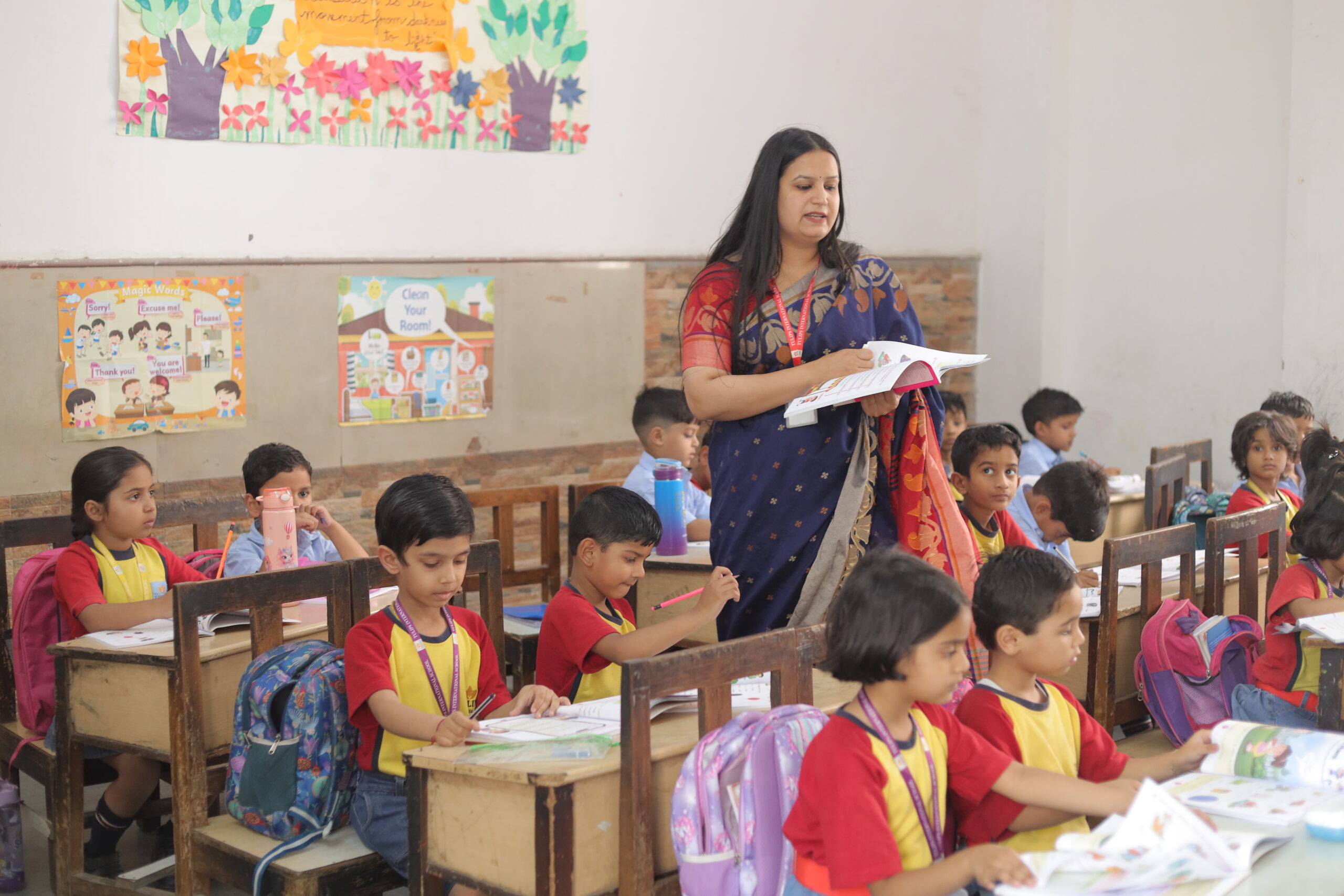
Primary is where a child starts encountering subjects as distinct disciplines — language, mathematics, environmental studies — rather than one blended stream of “school.” We keep the pace steady rather than accelerated, on the theory that a concept rushed through in Class II usually has to be re-taught in Class IV anyway.
Reading comprehension gets particular attention here, since it’s the one skill that quietly determines how well a student does in every subject from Class VI onward.
Middle
The Years That Shape Independent Thinkers
Class VI – VIII · Ages 11–13
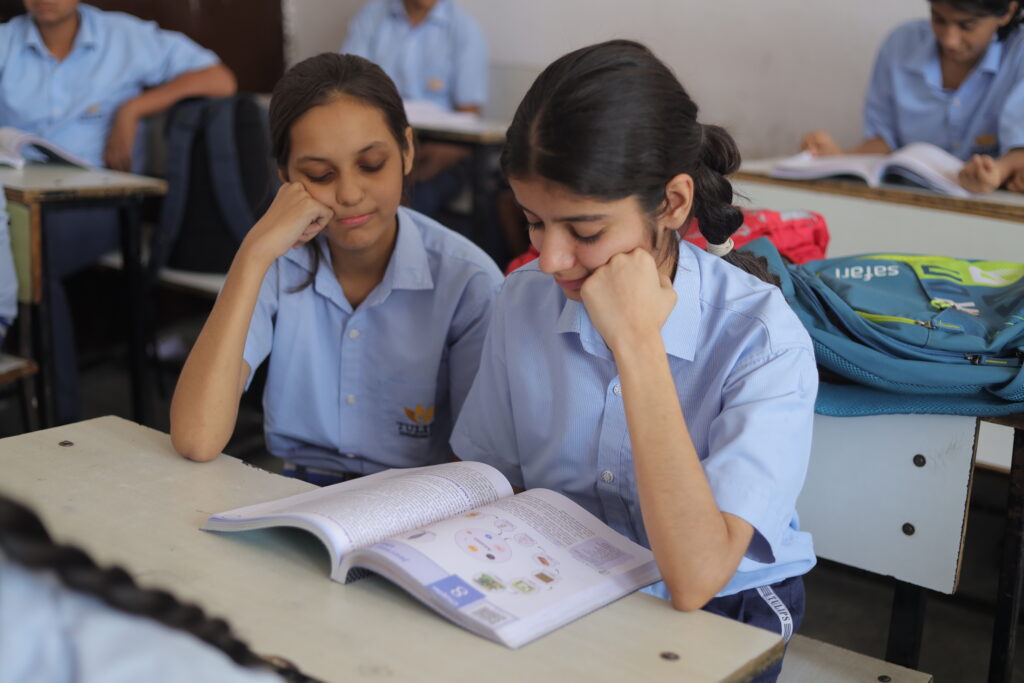
Middle School introduces the subject specialisation that will carry through to the boards — separate Science and Social Science, formal grammar, early algebra — while students are also, frankly, going through a fairly turbulent few years personally. We try not to pretend the second part isn’t happening.
This is also where computer science and a foreign language enter the timetable properly, rather than as an occasional activity period.
Secondary
Building Strong Foundations for Board Success
Class IX – X · Ages 14–15
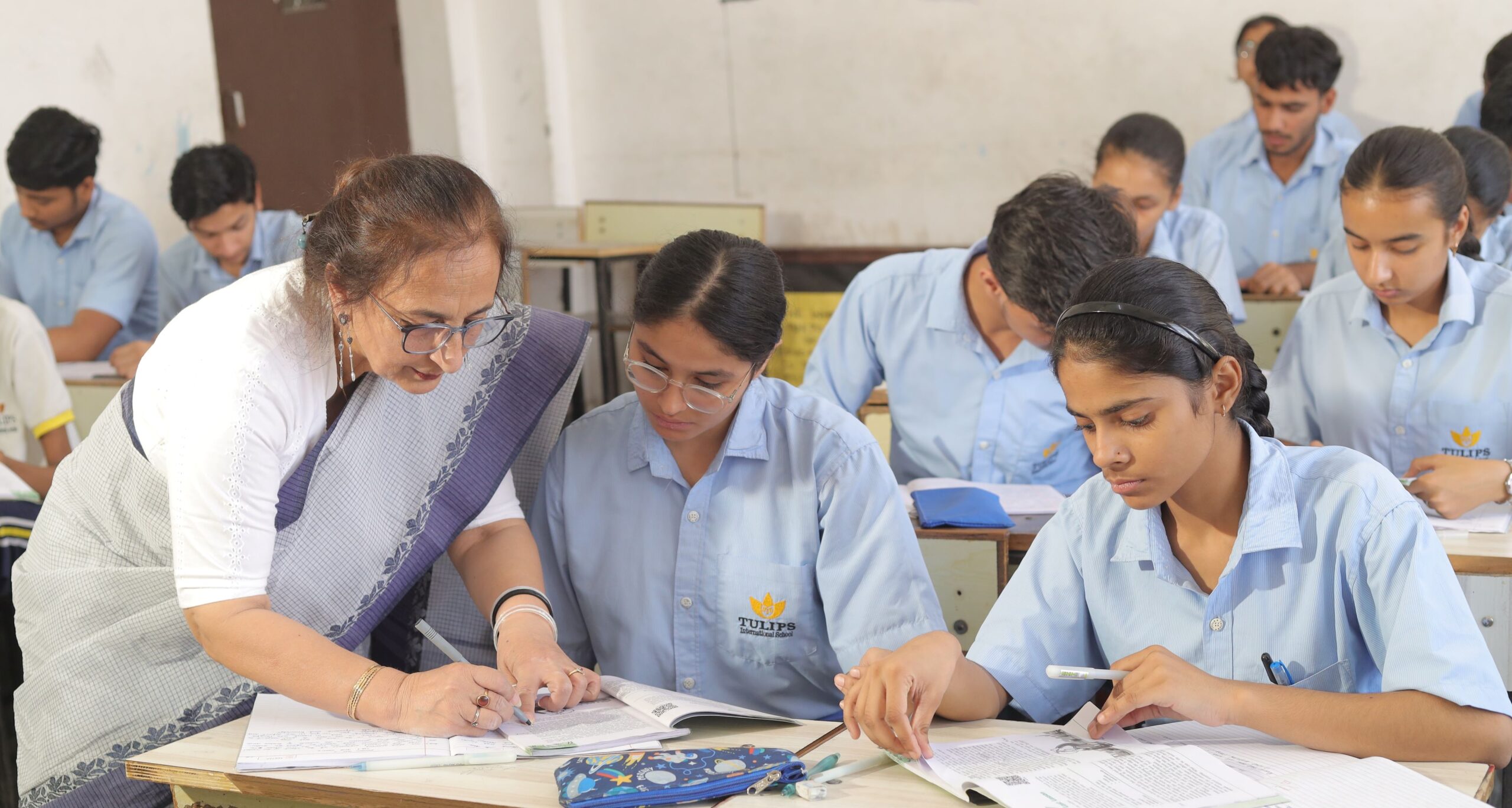
Class IX starts building toward the Class X CBSE board exam almost immediately, not because we believe in stress for its own sake, but because two years genuinely isn’t very long to cover the ground the board expects. We front-load Class IX with as much syllabus as students can reasonably absorb, so Class X has room for revision instead of new material crammed in at the end.
This is also the stage where a student’s stream choice for Class XI starts taking shape — not as a decision made overnight, but one built up through subject performance and genuine interest over these two years.
Senior Secondary
Specialising, With the Board Exam in View
Class XI – XII · Ages 16–17
By Class XI, students have chosen a stream — Science, Commerce, or Humanities — and the two years that follow are largely shaped by CBSE’s board requirements and, for many, competitive exams sitting just beyond them. Full subject and elective details live on our Departments page.
Our role in these two years is less about introducing new ways of thinking and more about depth — going far enough into a subject that a student walks into their board exam, and whatever comes after it, without feeling like they’re seeing the material for the first time.
Teaching Methodology
How Learning Comes to Life
Activity-Based Learning
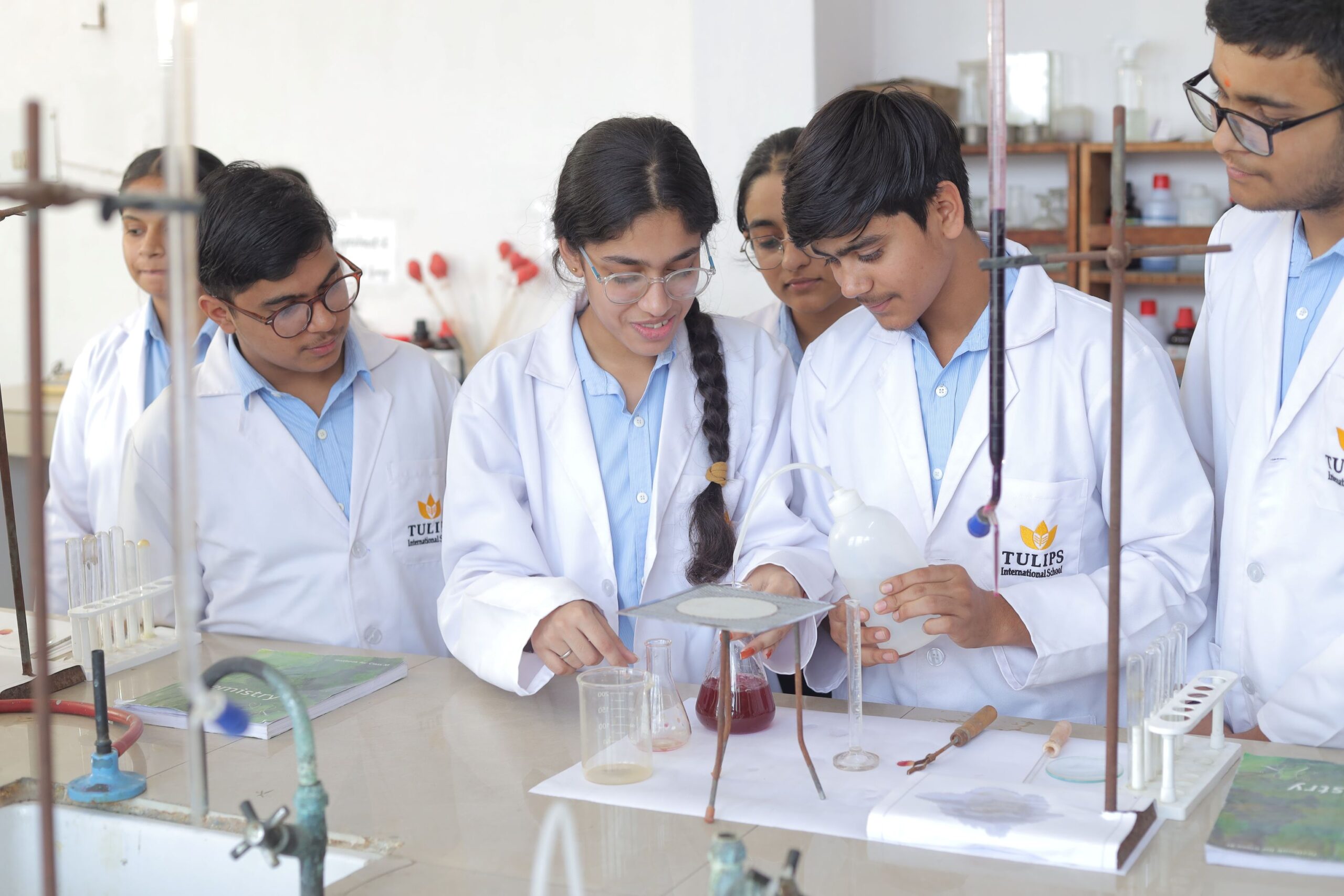
Students learn best when they actively participate rather than simply listen. Through hands-on activities, experiments, projects, demonstrations, and collaborative tasks, classroom concepts become meaningful, engaging, and easier to understand.
Continuous Assessment
Learning is monitored throughout the academic year instead of being measured only through final examinations. Regular assessments, classroom observations, assignments, and constructive feedback help identify strengths early and provide timely support wherever it is needed.
Differentiated Learning
Every student learns at a different pace and in a different way. Our educators adapt classroom instruction, provide additional guidance where required, and encourage advanced learners with meaningful enrichment so that every child continues to make steady progress.
Technology as a Tool
Technology enhances learning by making concepts more visual, interactive, and engaging. Smart classrooms, multimedia presentations, and carefully selected digital resources support classroom teaching while ensuring that teachers remain at the centre of every learning experience.